As organizations modernize their infrastructure, SQL Server environments are spreading across on-premises data centers, private clouds, and public cloud platforms like Azure. While this hybrid reality enables flexibility and scalability, it also introduces a major challenge: visibility and configuration drift.
Without a single source of truth, teams struggle to answer fundamental questions:
- What SQL instances do we have?
- Where are they running?
- Are they configured correctly?
Over time, small inconsistencies compound into security risks, compliance gaps, performance issues, and unnecessary costs.
The Visibility Problem in Hybrid SQL Environments
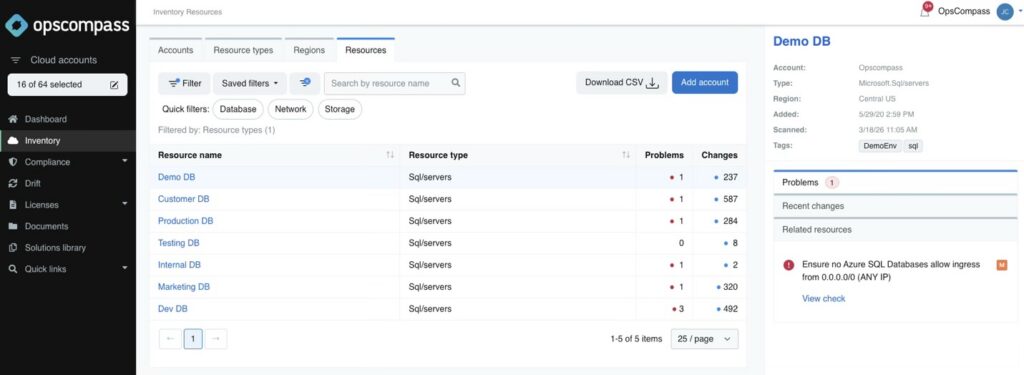
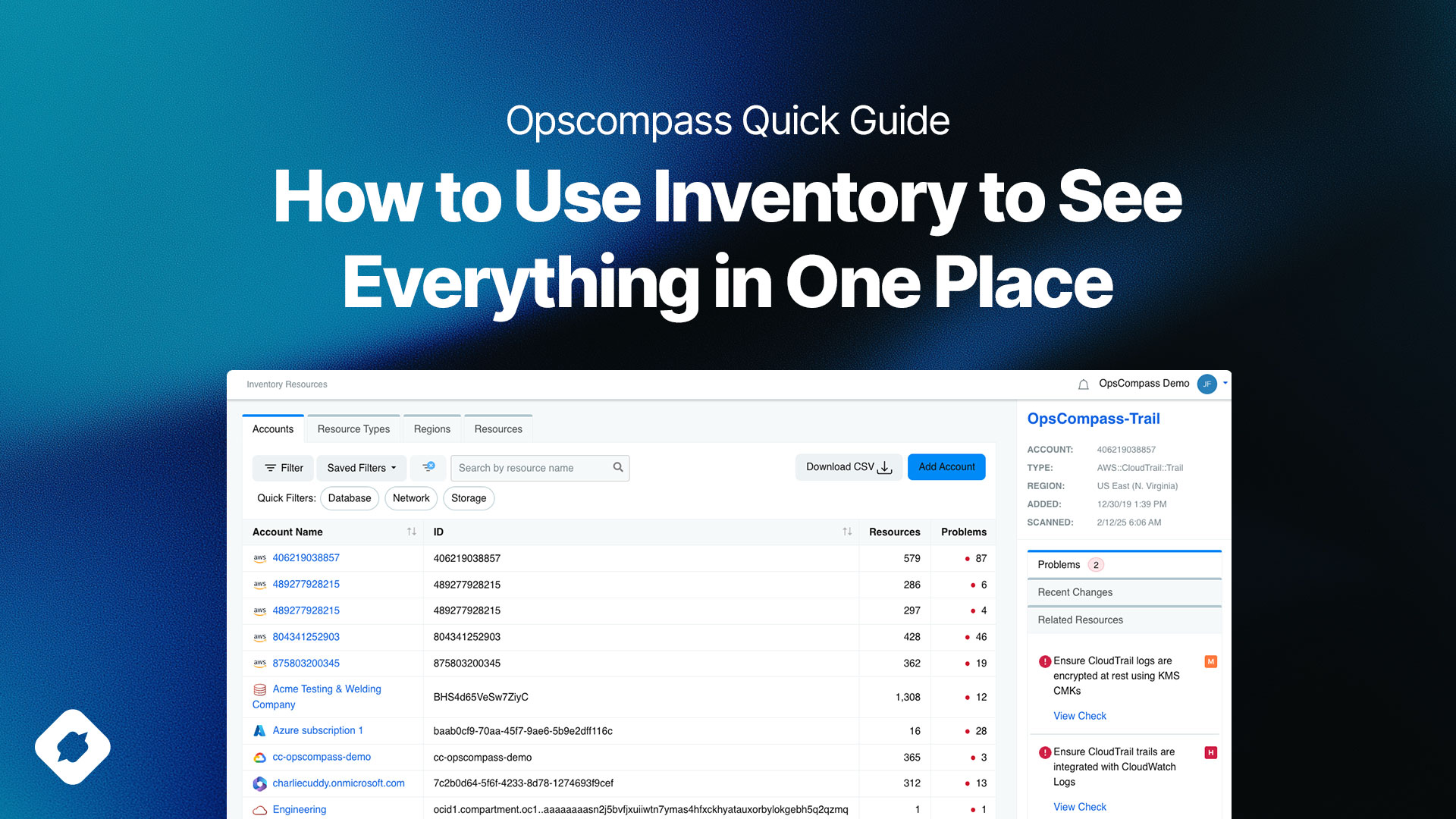
Most customers do not have a centralized way to view all of their SQL Server instances in one place. Tracking databases across onpremises infrastructure and multiple cloud environments is difficult, often due to fragmented permissions, tooling silos, and limited data availability.
This lack of visibility makes it nearly impossible to:
- Ensure deployments meet company and industry best practices
- Identify configuration drift and unauthorized changes
- Detect overallocated or underutilized resources
- Maintain security posture and patch consistency
- Track SQL versioning and license compliance
As hybrid estates grow, these issues escalate from operational headaches to boardlevel risks.
Opscompass: A Unified View of SQL Server Environments
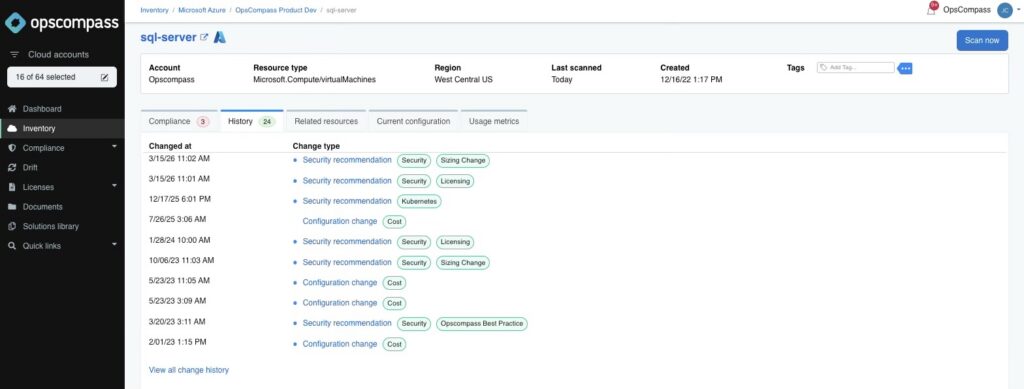
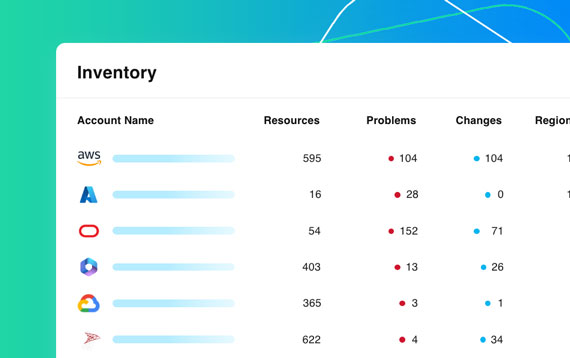
Opscompass fills the visibility gap by connecting directly to a customer’s Azure account and pairing that data with our professional consulting services. The result is a comprehensive, continuously updated view of the organization’s SQL Server estate—across cloud and hybrid environments.
Once SQL resources are onboarded into Opscompass, the platform can automatically answer critical questions:
- Is this a newly created instance?
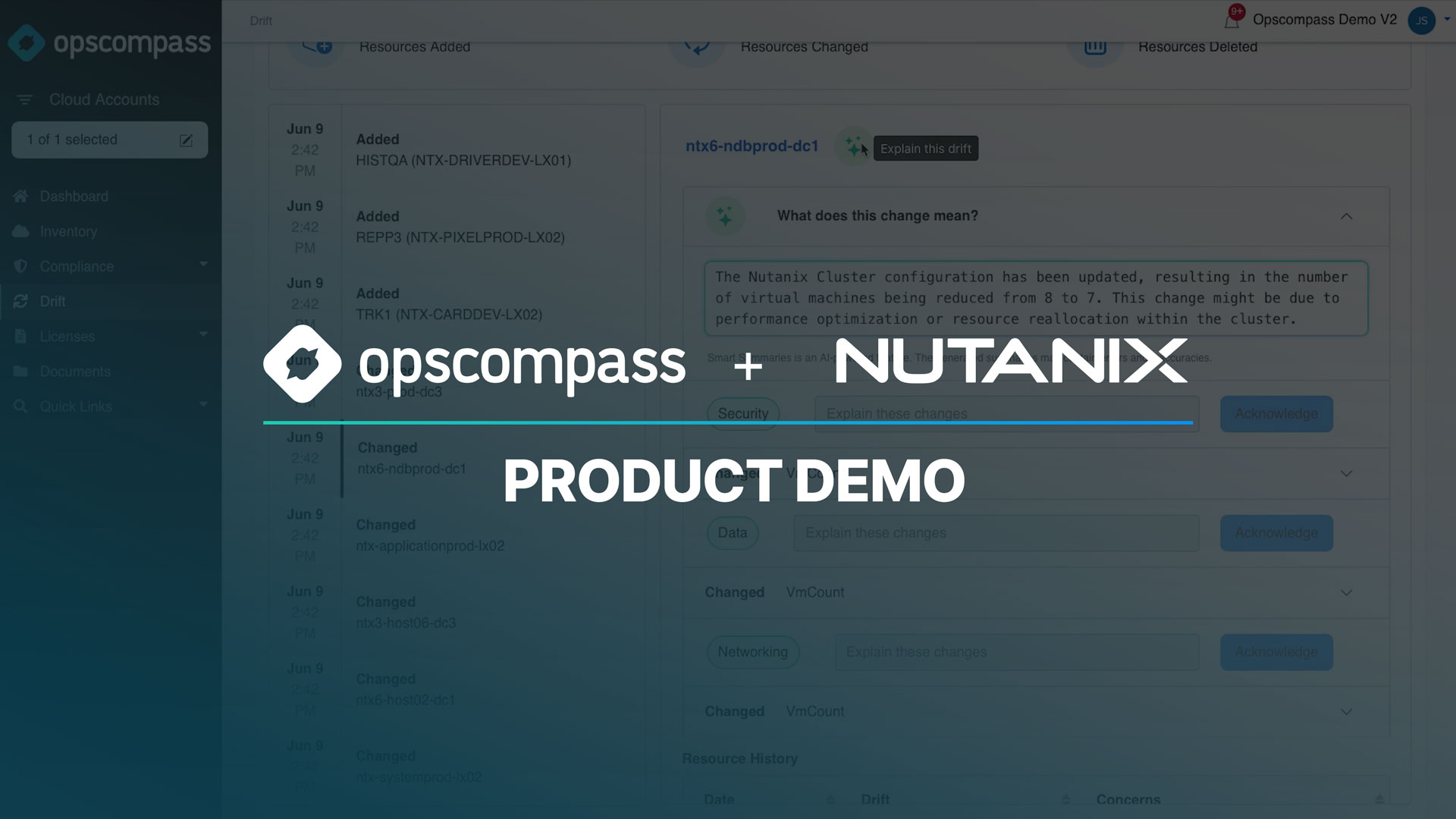
- Has the configuration changed since the last scan?
- Was an instance decommissioned or removed?
- Do configurations align with established best practice frameworks?
- Is license usage tracked correctly?
- Are vendor licenses sufficient to cover current deployments?
- Are instances patched to approved security levels?
- Who is responsible for changes made to each resource?
Instead of discovering drift after it causes an incident, teams can identify and address issues as they happen and be proactive with the health of their environment.
The Business Impact of Better SQL Governance
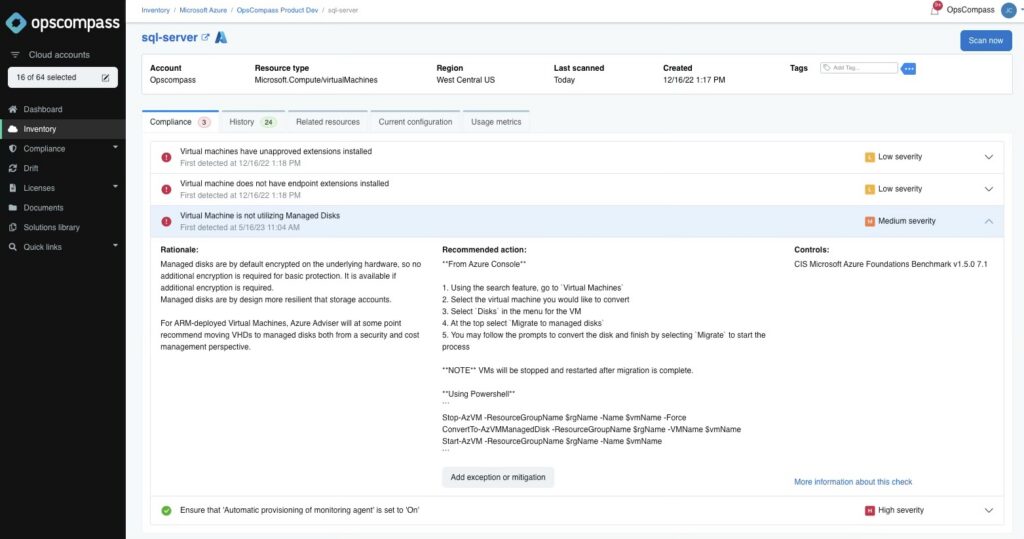
With Opscompass, organizations move from reactive firefighting to proactive governance. Key benefits include:
Resource Discovery
SQL resources are continuously identified as environments evolve.
Custom Alerts and Concerns
The right teams are notified when important changes occur.
Full Environment Visibility
On-premises and cloud SQL resources are viewed through a single lens.
BuiltIn Expertise
Real world best practices are applied automatically—not buried in documentation.
For customers navigating hybrid cloud complexity, Opscompass provides clarity, confidence, and control—so database environments support the business instead of slowing it down.
Customer Use Case: Regaining Control Over SQL Configuration Drift
A midsize enterprise operates dozens of SQL Server instances across onpremises infrastructure and Azure, supporting both customerfacing applications and internal analytics. Over time, different teams deploy databases using slightly different configurations, patch schedules, and security settings. When a performance issue surfaces in production, it takes days to determine whether the root cause is code, infrastructure, or an undocumented configuration change.
By implementing centralized SQL visibility and drift remediation using Opscompass, the organization gained a continuously updated view of every SQL resource across environments. When a new instance is created or a configuration changes, the platform flags the deviation from approved standards and flags those resources as out of compliance. Misconfigurations are identified early—often before end users or admin notice an issue—and remediation steps are clear and consistent. As a result, outages drop, audit preparation becomes routine instead of stressful, and operations teams regained confidence that their SQL environment is secure, compliant, and aligned with the business at all times.